BlogHabits
ADHD and mornings: a routine with fewer decisions
If mornings feel like a daily fight, build a routine that leans less on memory and willpower. Practical ideas for the night before and the first hour.
The Alarmis team4 min read

Mornings ask a lot of you all at once. You have to wake up, decide what to wear, remember what's happening today, keep track of time, find your keys and get out the door. Each step is small. Together, before coffee, they can feel like a wall.
If you have ADHD, you may know that wall well. Maybe you lose ten minutes to your phone in bed, or you're dressed and ready and then realize you're late. Maybe the problem starts the night before, when bedtime slides later because the evening is finally quiet.
This post is about building a morning that needs fewer decisions, less memory and less willpower, so the hard part is done before you're even awake. Take what fits and skip the rest. Everyone's mornings look different.
Move decisions to the night before
Every decision you make at 7 AM costs effort you may not have. Move as many as you can to the evening, when you have more to give.
- Lay out clothes. All of them, including shoes and a jacket.
- Pack your bag. Put it by the door, on top of your shoes, so you can't leave without it.
- Plan breakfast. Something you can eat without cooking, or that's already made.
- Check tomorrow. Look at your calendar and write the first thing you need to do on a sticky note.
Ten minutes in the evening can save half an hour of searching in the morning.
Make time visible
It's easy to lose track of time in the morning. A routine that relies on you checking the clock will drift.
- Use an analog clock. Watching the hands move can make time feel more real than a number on a screen.
- Put a clock where you get ready. In the bathroom, by the mirror, in the kitchen.
- Set alarms for transitions. "Get in the shower", "Start breakfast" and "Leave in 10 minutes" are all worth an alarm.
- Time your routine once. Find out how long getting ready actually takes, and plan around that number.
Put the plan outside your head
Your routine shouldn't depend on remembering it. Write it down and put it where you'll see it.
- A checklist on the door. Keys, wallet, phone, bag, lunch.
- A launch pad. One spot by the door where everything you need for tomorrow lives.
- Visual cues. Leave the thing you need to do next in your way. Put your keys on top of your shoes. Put your gym shoes in front of the bedroom door.
When the next step is in front of you, you don't have to remember it.
Make getting out of bed physical
Lying in bed is where a lot of mornings go wrong. A few minutes on your phone turns into forty. The fix is to get vertical before you start thinking.
- Put the alarm across the room. You have to stand up to turn it off.
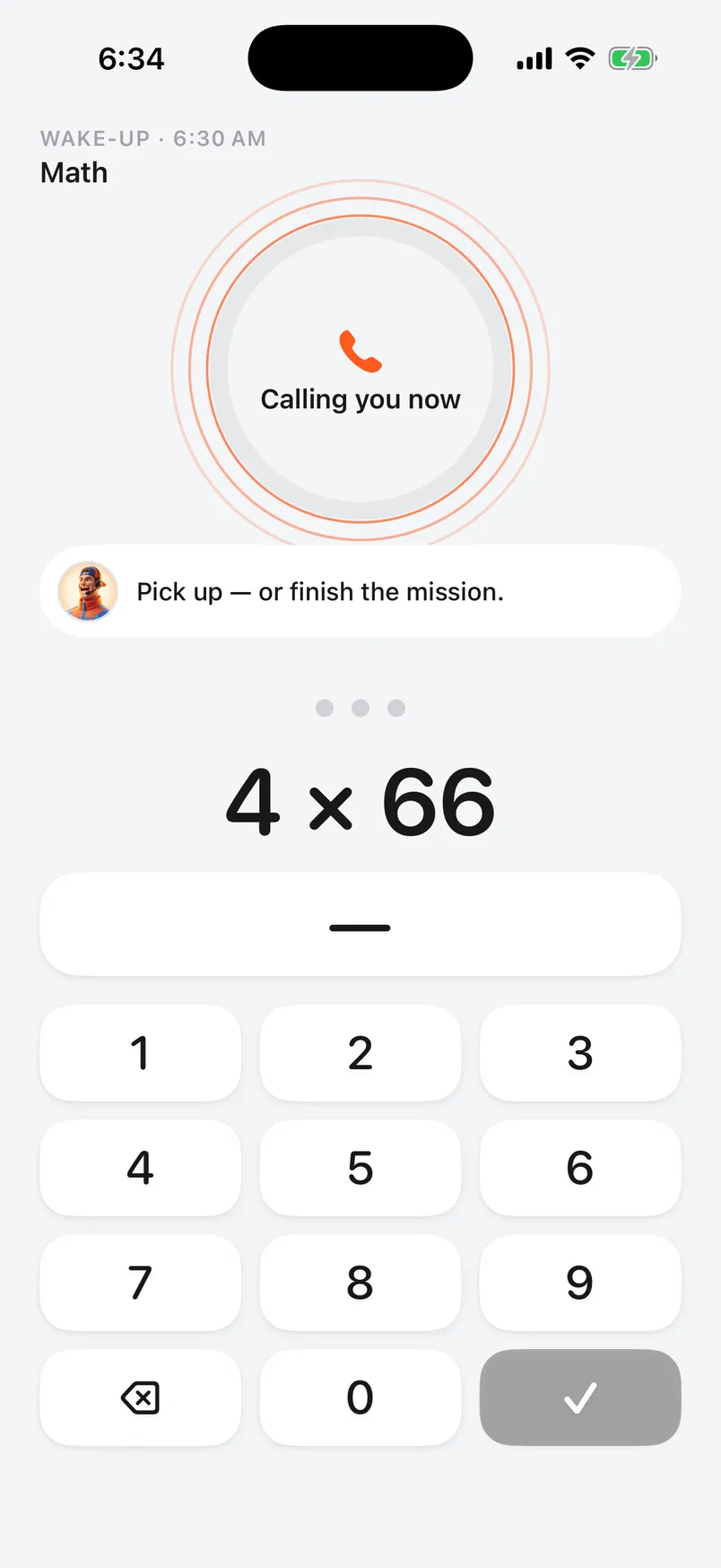
- Give yourself a task. An alarm that needs you to do something, like solving a few math problems or walking somewhere, gets you moving before you can drift.
- Leave the phone out of reach. Charge it outside the bedroom, or across the room with the alarm.
- Have one first move. Open the curtains, turn on the lights, start the kettle. Always the same thing.
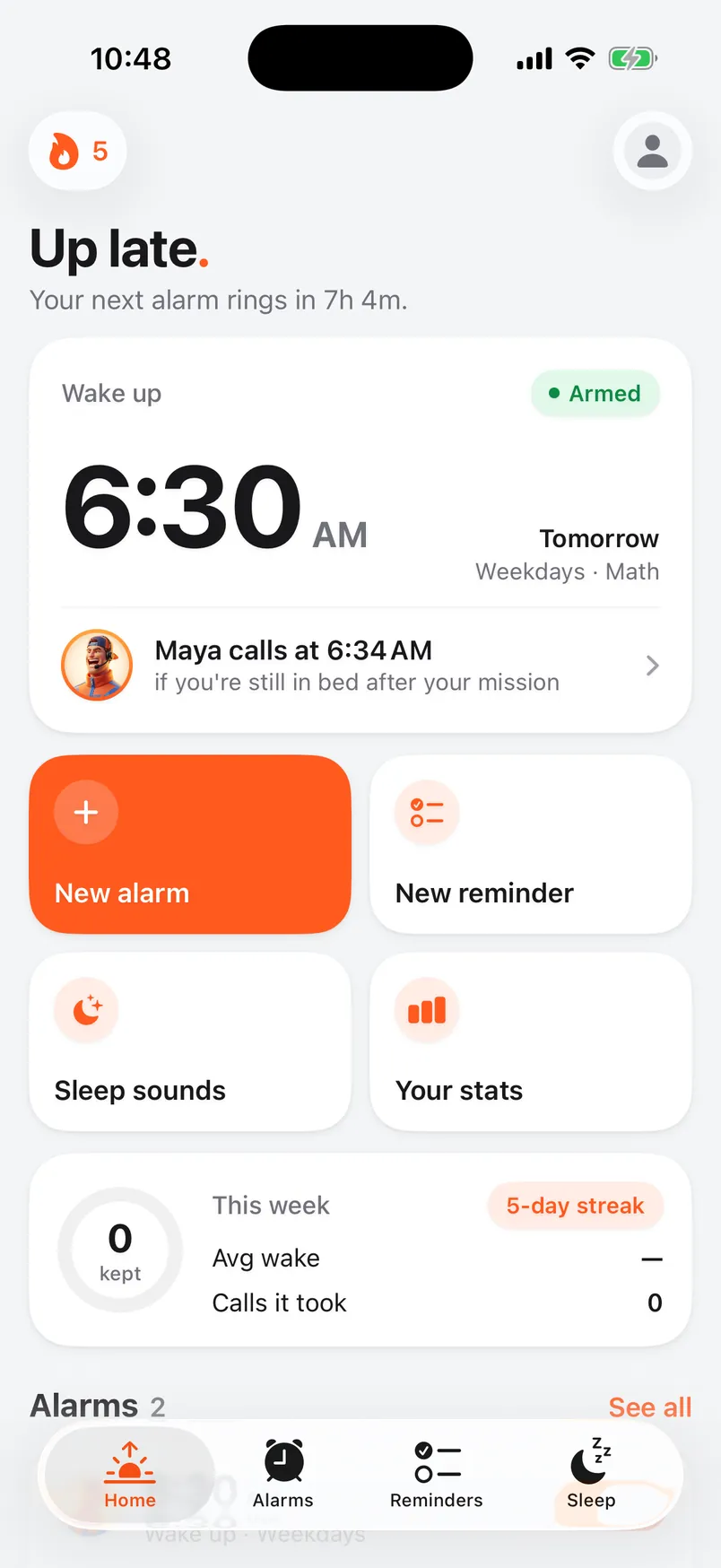
In Alarmis, the alarm has no snooze button, and you stop the countdown by finishing a wake-up mission. You can choose ones that get you out of bed, like walking a set number of steps or scanning a code you've stuck on the kitchen counter. If you're still in bed when your grace period ends, your caller phones you.
Add a person
Some people find it easier to do things when someone else is around, even if that person isn't helping. People often call this body doubling. Mornings can work the same way.
- A check-in buddy. Text a friend when you're up. If they don't hear from you, they call.
- Shared routines. Get ready at the same time as a partner or housemate.
- A call. A real voice on the phone is harder to ignore than a beeping alarm.
That last one is how Alarmis works. If you haven't finished your mission when the countdown ends, your caller rings your phone. You prove you're awake by answering math questions or repeating your affirmation on the call. You can choose from 75 characters, so pick one you'll actually want to talk to at 7 AM.
Reminders for later in the day
Mornings aren't the only time things slip. Alarmis also does reminders. Set a task for later, like "Leave for the dentist" or "Send the invoice". If you ignore the notification, your caller phones you about it.
Protect your sleep
A hard morning often starts the night before. If bedtime keeps sliding, try working back from your alarm. The CDC recommends 7 or more hours of sleep for adults aged 18 to 60, so a 7:00 alarm means lights out by midnight at the latest, and earlier if you take a while to fall asleep.
Alarmis can send a bedtime warning before your next alarm, timed to the amount of sleep you're aiming for. Turn on the wind-down nudge for a quieter reminder 45 minutes before that.
Be kind to bad days
Some mornings will fall apart no matter what you've set up. That's not a failure of the system or of you.
- Skip the post-mortem. You don't need to work out what went wrong today.
- Restart tomorrow. The routine is still there. Use it.
- Adjust slowly. If something keeps failing, change one thing at a time.
Talk to your clinician
If you take medication for ADHD, or you're struggling with sleep, talk to your doctor about your mornings. They can help with things like timing and sleep that an app or a blog post can't.
This isn't medical advice.