BlogHabits
The morning streak method
Count the mornings you get up on time, protect the count, and plan for the day you miss. A simple system for making early wake-ups stick.
The Alarmis team5 min read

Motivation is great for the first week. After that, you need something else to get you out of bed on the mornings you don't feel like it.
A streak is one of the simplest tools for that. You count the mornings in a row you got up on time, and you try not to break the count. It sounds almost too simple. There's nothing to configure and nothing to remember except today.
Here's how to set one up so it helps on a hard morning and doesn't fall apart on the first bad one.
Why a count helps
A streak turns an invisible habit into a number you can see. "I've been getting up earlier" is vague. "Twelve mornings in a row" is concrete, and you'll notice it on day thirteen when the alarm rings and the bed is warm.
It also shrinks the decision. You don't have to commit to being a morning person forever. You only have to keep the count going today.
And it gives you a record. When you look back after a month, you'll see which days were hard and which weeks went well. That's useful when you're trying to figure out what to change.
Define a win before you start
An easy way to wreck a streak is to be vague about what counts. Decide the rule now, while you're awake and reasonable, so you're not negotiating with yourself at 6 AM.
A good rule is specific and checkable:
- Out of bed by a set time. "Feet on the floor by 6:30" is better than "wake up early".
- Up means up. Getting out of bed and then going back counts as a miss.
- Same rule every day. If weekends have a different time, write that down too.
Keep the rule about getting up. Bedtime, exercise and breakfast are worth tracking, but put them in a separate count. One streak with one rule is easier to keep honest.
Start with a target you can hit
It's tempting to pick an ambitious time and go all in. That often ends with a broken streak in the first week and a feeling that the whole thing doesn't work.
Start with a wake time you can hit on most days, even if it's only 15 minutes earlier than now. Once you've kept the streak for a couple of weeks, move the time a little earlier. A long streak at a modest time is worth more than a short streak at an impressive one.
If seven days a week feels like too much, start with weekdays and keep weekends separate. You can widen it later.
Plan for the miss
You will miss a morning. You'll be sick, or travelling, or up late with a crying kid, or you'll just sleep through it. Plan for that now, because how you handle the first miss decides whether the method survives.
A few approaches that work:
- Never miss twice. One miss is a blip. Two in a row is the start of a new pattern. Make the morning after a miss the one you protect hardest.
- Allow a freeze. Give yourself a small number of "free" misses that don't break the streak. One a week or one a month is plenty. Decide in advance when you'll spend one.
- Track the long run too. Alongside your current streak, track your best streak and your total mornings. A broken streak stings less when the total keeps growing.
Keep the record honest
A streak only helps if it's true. The temptation to fudge it on a borderline morning is real, especially when the number gets big.
Make the record automatic if you can. A calendar on the wall works if you mark it every morning without fail. An app works better if it records the time you got up, so there's no judgment call.
If you do fudge a morning, you'll know. And the next time the streak tempts you to get up, you'll remember that it isn't quite real.
Use the streak to shape your evenings
After a week or two, you'll notice the streak is decided the night before. Late nights make for hard mornings.
Use that. Before bed, look at your count and ask whether your plan for the evening protects it. If you need to be up at 6:30, work back to a bedtime that gives you a full night's sleep and set a reminder for it.
How Alarmis counts mornings
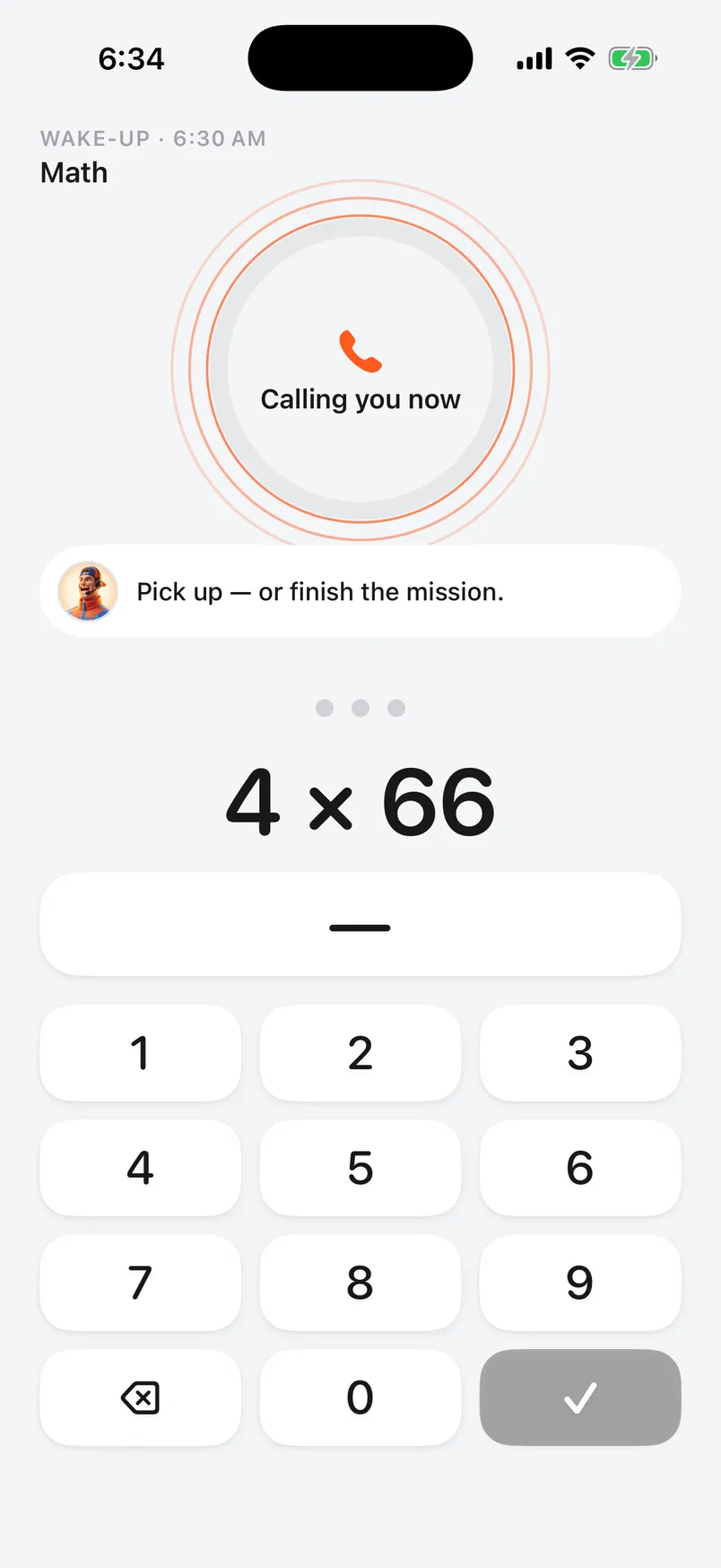
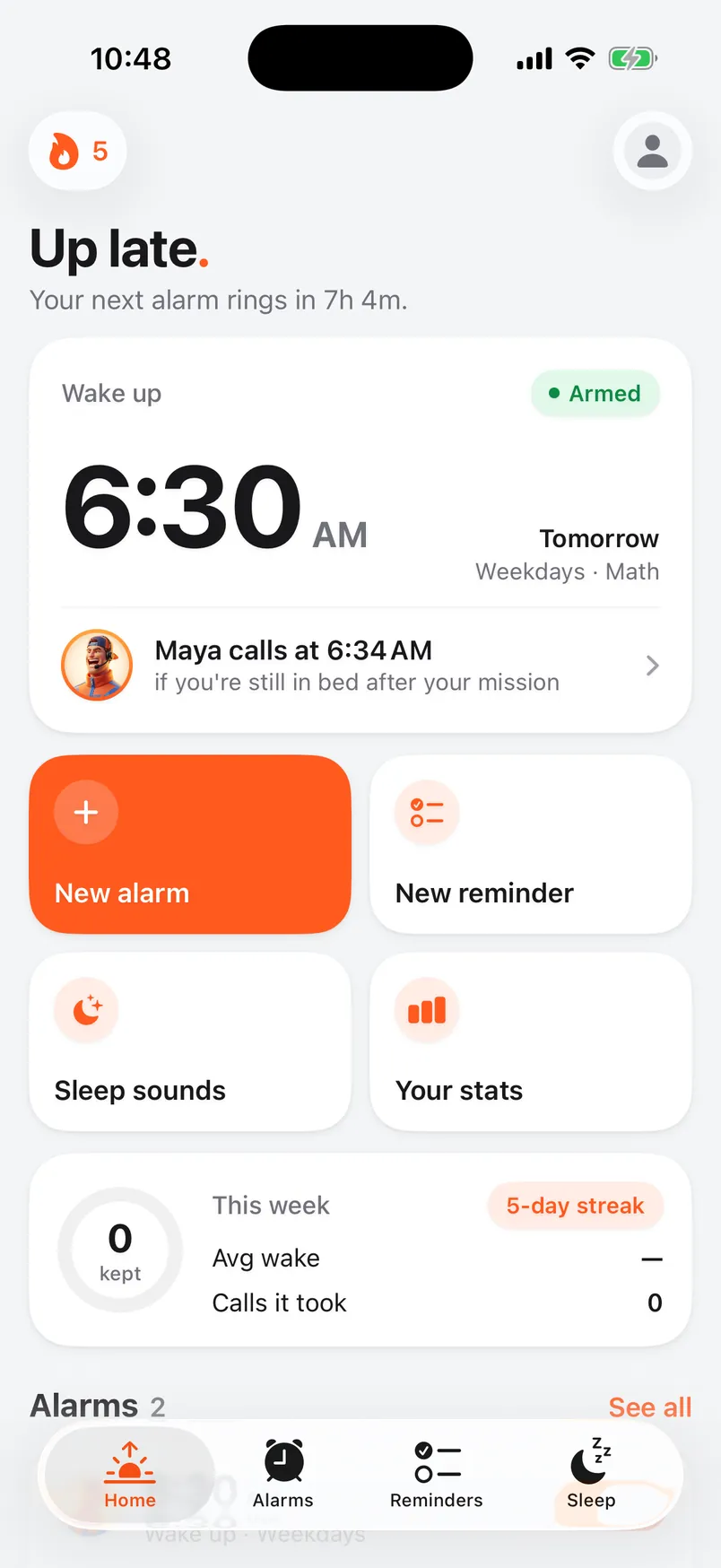
Alarmis keeps a streak for you. Every morning you win adds a day. You win by finishing your wake-up mission before the countdown ends, or by answering your caller and proving you're awake on the call.
Every seven-day streak earns you a streak freeze. If you miss a morning, a freeze covers it, so one bad day doesn't wipe out a long run. Your stats show your current streak and your longest one.
After each morning, a summary shows when you got up, how many calls it took and when your next alarm rings. Over a few weeks, that adds up to an honest picture of your mornings.
A 30-day plan
- Day 1. Write down your rule: the time, what counts as up, and which days count.
- Days 1 to 7. Keep the wake time modest. Mark every morning. Don't change anything else yet.
- Day 8. Look at the week. Which mornings were hard? What happened the night before?
- Days 8 to 14. Fix one evening habit that hurt your mornings, like a late screen or a late dinner.
- Day 15. If you hit most days, move your wake time 15 minutes earlier.
- Days 15 to 30. Keep going. If you miss, use a freeze or make the next morning count.
- Day 30. Look at your total. Decide whether to move earlier again, add weekends, or hold steady.
The short version
- Count mornings you got up on time, in a row.
- Define a win clearly before you start.
- Start with a time you can hit, then move it earlier.
- Plan for misses with a "never miss twice" rule or a freeze.
- Keep the record honest and automatic.
- Protect the streak the night before.