BlogHabits
Why accountability helps you get out of bed
A promise to yourself is easy to renegotiate at 6 AM. A promise someone else can check is harder to break. Here's how to build that into your mornings.
The Alarmis team4 min read

At 10 PM, getting up at 6 sounds easy. You set the alarm, picture a calm morning and go to sleep feeling good about it.
At 6 AM, a different person hears the alarm. That person is warm, groggy and very good at finding reasons to stay in bed. "I'll go to the gym tonight instead." "I didn't sleep well." "Nobody will know."
That last one is the important part. When you're the only one who knows whether you got up, the morning version of you gets to rewrite the plan. Accountability changes that by putting someone else in the loop.
Why promises to yourself slip
The decision to get up happens at the worst possible moment, when you're half awake and the bed is at its most comfortable. Willpower has a hard time there.
Promises to yourself have no witness. You can quietly lower the bar, and the only person who could object is the one who wants to stay in bed. Over a few weeks, "I'll get up at 6" turns into "I'll get up at 6 on good days", and then into "I'll get up when I get up".
What accountability adds
Bringing another person into your mornings changes three things.
- Someone notices. Knowing a friend will see whether you checked in makes skipping feel different. It's no longer a private choice.
- Skipping costs something. Even a small cost, like an awkward text or a friendly bet, gives the morning version of you a reason to get up that it can't argue away.
- There's a record. Someone else's memory of your mornings is harder to edit than your own.
None of this needs to be harsh. The best accountability is light, a little funny and easy to keep up.
Kinds of accountability
You don't need an app for any of these. Pick one that fits your life.
A morning check-in
Agree with a friend that you'll each send a message when you're up. A photo of your coffee works. If one of you doesn't check in by the agreed time, the other one calls.
A shared commitment
Plan something in the morning that involves someone else. A run with a neighbor, an early coffee with a colleague, a gym class you booked with a friend. It's much harder to cancel on a person than on a plan.
A visible record
Put your streak somewhere other people can see it. A calendar on the fridge in a shared house works. So does a group chat where everyone posts their wake time.
A friendly stake
Agree on a small, fun consequence for a missed morning. The loser buys coffee, picks the playlist or does the dishes. Keep it small enough that you'll actually enforce it.
A phone call
The most direct version is someone who calls you if you're not up. It's hard to ignore a ringing phone, and harder still to lie to someone who's asking if you're awake.
Choose the right partner
The right partner makes this work. A few things to look for:
- Reliable. They need to check in every day.
- Kind but firm. You want someone who won't let you off the hook, and also won't make you feel terrible.
- Invested. It helps if they have their own goal and you hold each other to it.
Agree on the rules up front: what time, what counts as up, and what happens if someone misses. Write them in your chat so nobody has to remember.
If you don't have a partner
Not everyone has a friend who's up at 6 and happy to check on them. You can still add some outside pressure.
- Make it public. Tell a group chat or a few coworkers what time you're aiming for, and post your wake time each morning for two weeks.
- Book something. A paid class or an early appointment creates a commitment that exists outside your head.
- Join a group. Running clubs, early study groups and online communities built around waking up all give you people who'll notice when you're missing.
- Let something call you. If there's nobody to phone you, an alarm that places a call does a similar job.
The common thread is that someone or something outside you knows the plan.
Keep it light
Accountability works best when it feels like a game. If a missed morning leads to guilt and a lecture, you'll start avoiding the check-in, and the whole thing collapses.
Expect misses, laugh them off and focus on the next morning. The point is to tilt the odds in your favor on a hard day.
How Alarmis builds it in
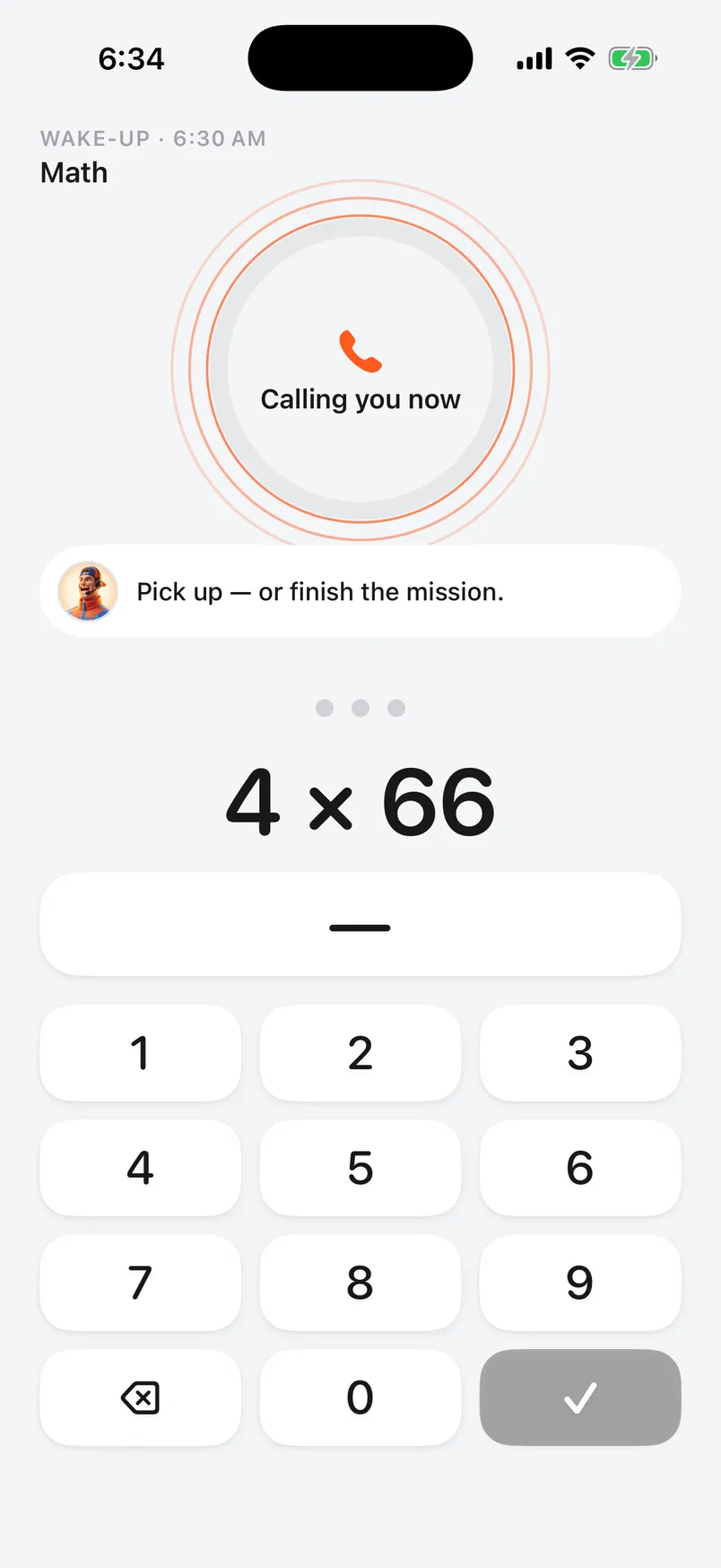
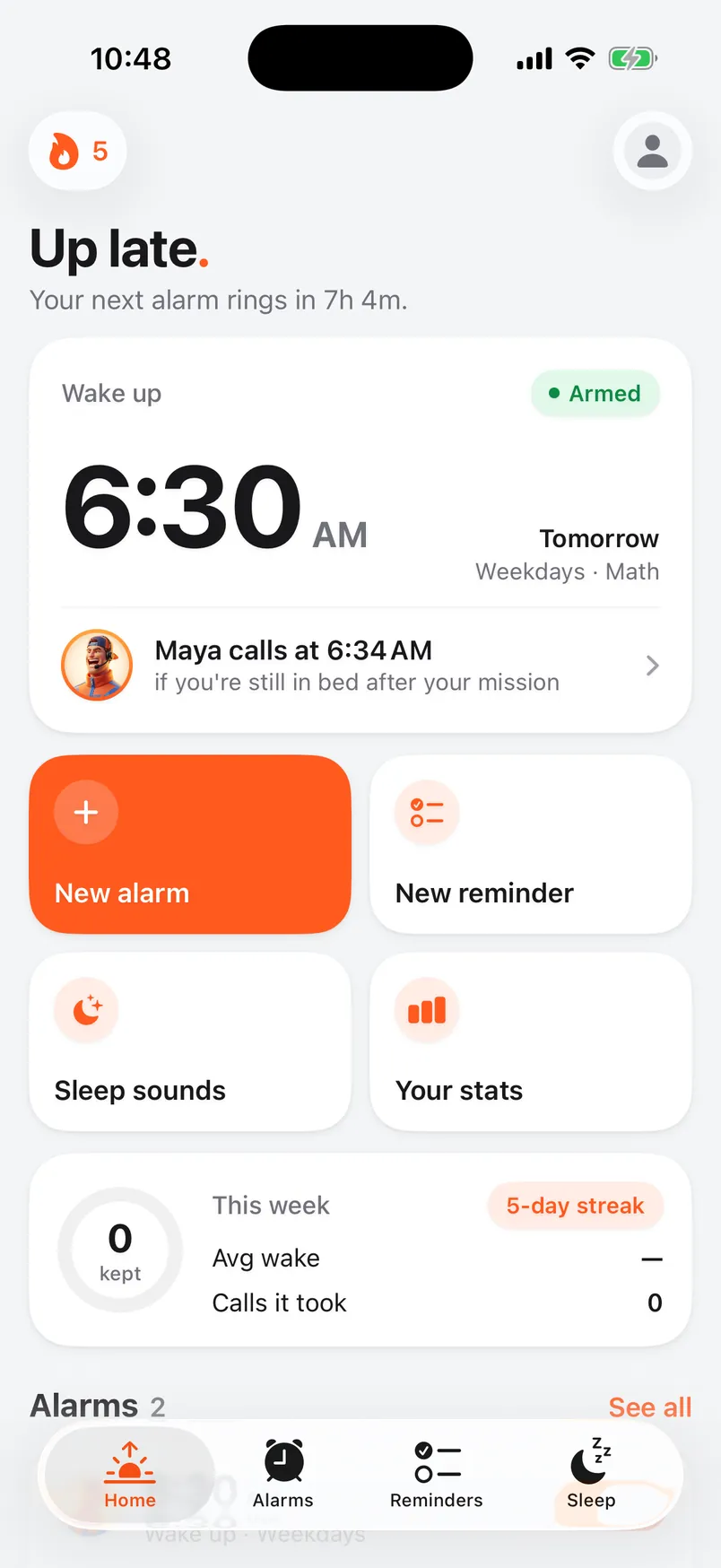
Alarmis puts a caller in the loop every morning. If you haven't finished your wake-up mission when your grace period ends, your caller phones your actual number. You prove you're awake by answering math questions or repeating your affirmation on the call.
If you turn on the callback check, a few minutes after you're up your caller asks if you're still awake. Don't confirm and they call again.
You can also add accountability partners. You set the stakes: how many missed wake-ups, over how many days, and how long your partner has to make their pick. Cross that line, and your partner gets one pick of your caller. Any caller, in any language. They only choose the caller. They can't change your alarm times, whether an alarm is on, or your phone number. They don't need the app either. You send them a link.
Try it this week
- Pick one form of accountability from the list above.
- Ask one person to join you, and agree on the rules in writing.
- Run it for seven days.
- At the end of the week, talk about what worked and adjust.
Start small. One other person who'll notice if you're not up is enough.