BlogWaking up
How to wake up early, and keep doing it
Move your alarm in small steps, guard your bedtime and make the first five minutes automatic. A plan you can start tonight.
The Alarmis team5 min read

Waking up early once is easy. You set an alarm, you feel a burst of motivation, and you're up before the sun. The hard part is the fourth morning, when you went to bed late, the room is cold and the reason you started feels far away.
This guide is about that fourth morning. It covers how to pick a wake time you can hold, how to move toward it without wrecking your week, and how to set up your bedroom and your evening so getting up takes less willpower.
Decide what the early hour is for
An early alarm with no plan behind it is easy to cancel. "I want to be a morning person" won't get you out of bed in January. "I want 40 minutes to run before work" might.
Write down one specific use for the time you're creating:
- a workout before the day fills up
- quiet time to read, write or study
- a calm breakfast instead of eating in the car
- getting to work early so you can leave early
Keep it small and concrete. When the alarm rings, that sentence is what you'll argue with.
Move your alarm in small steps
If you wake at 7:30 now and want to wake at 5:30, don't jump two hours tonight. A big jump often means lying awake at the new bedtime, sleeping less and giving up by the weekend.
Move the alarm in small steps instead. A common approach is 15 minutes earlier every few days. Hold each new time until it feels normal, then move again. Going from 7:30 to 5:30 that way takes a few weeks, and each step is small enough that you barely notice it.
Move your bedtime by the same amount each time. Waking earlier without going to bed earlier only shortens your night.
Protect the other end of the night
Every early-rising plan is also a bedtime plan. The CDC says adults aged 18 to 60 need 7 or more hours of sleep a night. Work backwards from your alarm to find your lights-out time:
- Start with your wake time, say 6:00.
- Subtract the sleep you need. Seven and a half hours puts you at 10:30.
- Subtract the time it takes you to fall asleep. If that's 15 minutes, lights out is 10:15.
- Subtract your wind-down routine. Thirty minutes means you start getting ready at 9:45.
That last number is the one to put in your calendar. It's the moment your evening ends, and it's easy to blow past without a reminder.
Keep the same wake time every day
Sleeping in on Saturday feels like a reward, but it makes Monday harder. The CDC lists going to bed and getting up at the same time every day as a habit for better sleep, and that includes weekends.
You don't need to be strict to the minute. Try to keep your weekend wake time within about an hour of your weekday time. If you're short on sleep, an earlier bedtime on Friday is a better fix than a late Saturday morning.
Make the first five minutes automatic
The decision to get up happens in the first few minutes after the alarm, when your judgment is at its worst. Make those minutes require as little thought as possible.
- Put the alarm out of reach. If your phone is across the room, you have to stand up to turn it off.
- Set out what you need. Clothes on the chair, shoes by the door, a glass of water on the nightstand.
- Give yourself one first action. Open the curtains, turn on the kettle, or step outside. Pick one thing and always do it first.
- Turn on the lights. A dark room makes going back to bed feel natural.
The goal is a short chain of steps you can follow half awake, so you're up before you've had time to negotiate.
Take snooze off the table
The snooze button turns one decision into five. Each time it rings you get another chance to say "ten more minutes", and eventually you say it once too often.
If you can't resist it, remove it. Set one alarm at the time you actually need to get up, and make turning it off take some effort.
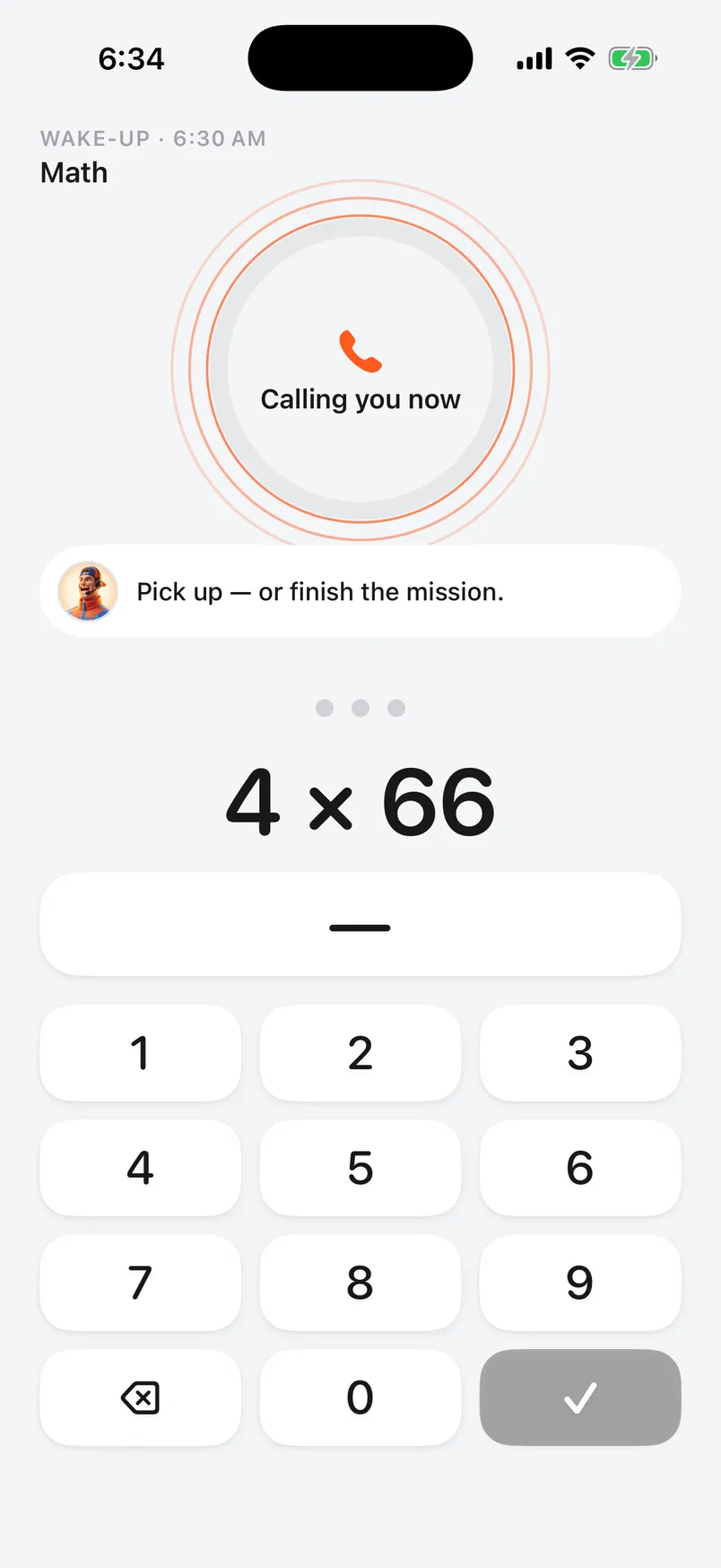
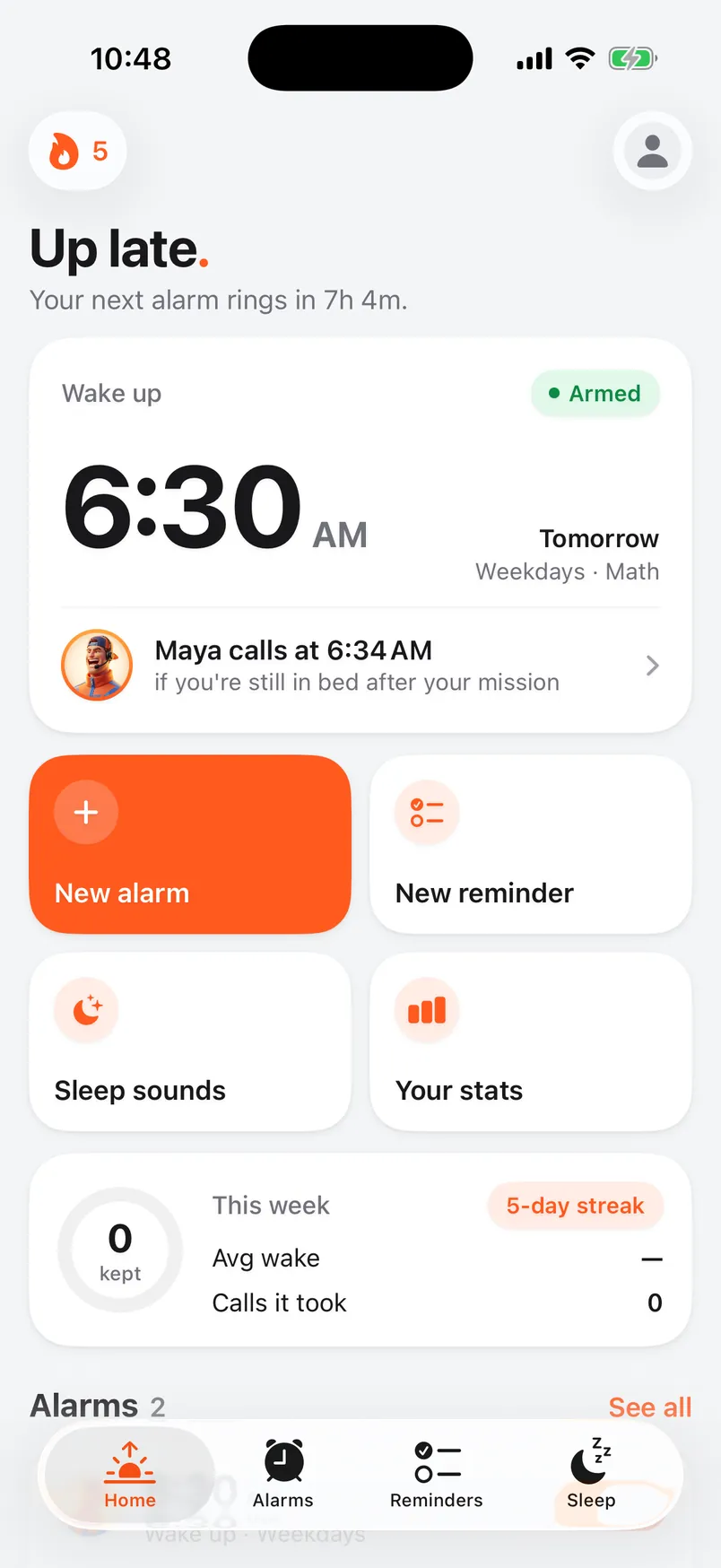
This is the idea behind Alarmis. There's no snooze button. To stop the countdown, you finish a wake-up mission, like solving math problems, taking a set number of steps or scanning a code you've stuck by the coffee maker. If you're still in bed when your grace period ends (you pick anywhere from 2 to 10 minutes), your caller phones you, up to 3 times. It's hard to drift back to sleep when someone is calling to ask if you're up.
Expect bad mornings
You'll have nights that run late and mornings you miss. That's normal, and it isn't a reason to abandon the plan. What matters is the next morning.
A few rules help:
- Never miss twice in a row. One late morning is a blip. Two is the start of a new habit.
- Keep the wake time even after a bad night. Sleeping in undoes the rhythm you've been building. Go to bed a little earlier that night instead.
- Track it. A simple count of mornings you got up on time makes progress visible. Alarmis keeps a streak for you, and a streak freeze covers a morning you miss so one bad day doesn't erase a good run.
A sample two-week plan
Here's what the plan looks like for someone moving from 7:00 to 6:00.
- Days 1 to 3. Alarm at 6:45. Lights out 15 minutes earlier than usual. Pick your one first action.
- Days 4 to 6. Alarm at 6:30. Move the phone across the room. Set out clothes the night before.
- Days 7 to 9. Alarm at 6:15. Keep the weekend wake time within an hour.
- Days 10 to 14. Alarm at 6:00. Start using the extra hour for the thing you wrote down on day one.
If a step feels too hard, stay on it for a few more days before moving on. Slow progress you keep beats fast progress you abandon.
The short version
- Know what the early hour is for.
- Move your alarm 15 minutes at a time, and your bedtime with it.
- Aim for at least 7 hours of sleep and work your bedtime back from your alarm.
- Keep the same wake time on weekends.
- Make the first five minutes automatic, and take the snooze button away.
- When you miss a morning, get up on time the next day.
This isn't medical advice.