BlogWaking up
Is snoozing bad for you?
Snoozing swaps a stretch of unbroken sleep for a few short dozes. Here's what you give up, when it matters less, and how to stop if you want to.
The Alarmis team4 min read
The alarm goes off at 6:00. You hit snooze. It goes off again, and you hit snooze again. By the time you actually get up it's 6:30, and you don't feel any more rested than you did half an hour ago.
Maybe that's a rare morning for you. Maybe it's every morning. So is snoozing actually bad for you, or is it a harmless way to ease into the morning?
This post won't pretend to settle the health question. That's for sleep scientists and your doctor. What we can do is look at what snoozing changes about your morning, when it matters, and how to stop if you decide you want to.
What snoozing actually does
Here's the simple version. If your alarm is set for 6:00 and you get up at 6:30 after three snoozes, you spent that half hour in short pieces. A few minutes of drifting off, then the alarm, then a few more minutes, then the alarm again.
If you'd set the alarm for 6:30 in the first place, you could have spent that half hour asleep without interruption. Same wake time, more unbroken sleep.
That's the core trade. Snoozing breaks your last stretch of sleep into shorter dozes.
The practical costs
Leave the health debate aside and snoozing still has costs you can see.
- You start later than you planned. Every snooze pushes your morning back. The time usually comes out of breakfast, exercise or the calm start you meant to have.
- You start rushed. Getting up at the last possible minute means the first hour is a scramble.
- You make the same decision over and over. Each snooze asks you to decide whether to get up, at the moment you're least able to decide well.
- You teach yourself to ignore the alarm. If the first alarm never means "get up", it stops sounding like it does.
That last one is easy to underestimate. Once your first alarm is a suggestion, you may find you need a second, then a third, and getting up keeps getting harder.
When it might matter less
Not every snooze is a problem. If you're getting enough sleep, you wake up feeling fine, and you like a few slow minutes in bed before you get up, a single snooze may not be worth fighting.
A few questions help sort it out:
- Are you getting enough sleep? The CDC recommends 7 or more hours a night for adults aged 18 to 60. If you're regularly getting less, snoozing may be a sign of a short night.
- Do you snooze once, or until the last possible minute?
- Are you late, rushed or stressed because of it?
- Would you rather have that time for something else?
If you're well rested, snooze once and start the day calm, there may be nothing to fix. If you're snoozing your way into a rushed, groggy morning every day, it's worth changing.
Why the snooze button is so hard to resist
When the alarm rings you're groggy and warm, and the bed is very comfortable. Your long-term goals feel far away. In that moment, a few more minutes always sounds reasonable.
The person who set the alarm last night and the person who hears it this morning want different things. Snoozing happens because the morning version gets the final say. Most of the fixes below work by taking that decision away from the morning version. They make the choice the night before, when you're thinking clearly, and leave as little as possible to decide when the alarm rings.
How to stop snoozing
Set the alarm for when you need to get up
If you always snooze for 20 minutes, set the alarm 20 minutes later and get up when it rings. You keep the same wake time and get that time back as real sleep.
Fix the other end of the night
If you need several snoozes to function, you may simply not be sleeping enough. Work backwards from your alarm and set a bedtime that gives you a full night. A reminder an hour before bedtime can help you actually go.
Put the alarm out of reach
If you have to stand up and walk across the room to turn off the alarm, you're already out of bed. That alone makes snoozing harder.
Have a first step
Decide the one thing you'll do as soon as you're up. Open the curtains, start the coffee or take a shower. A clear first step gives you somewhere to go.
Remove the button
The simplest fix is to make snoozing impossible. Turn off the snooze option on your alarm if you can, or use an alarm that doesn't have one.
Taking the button away
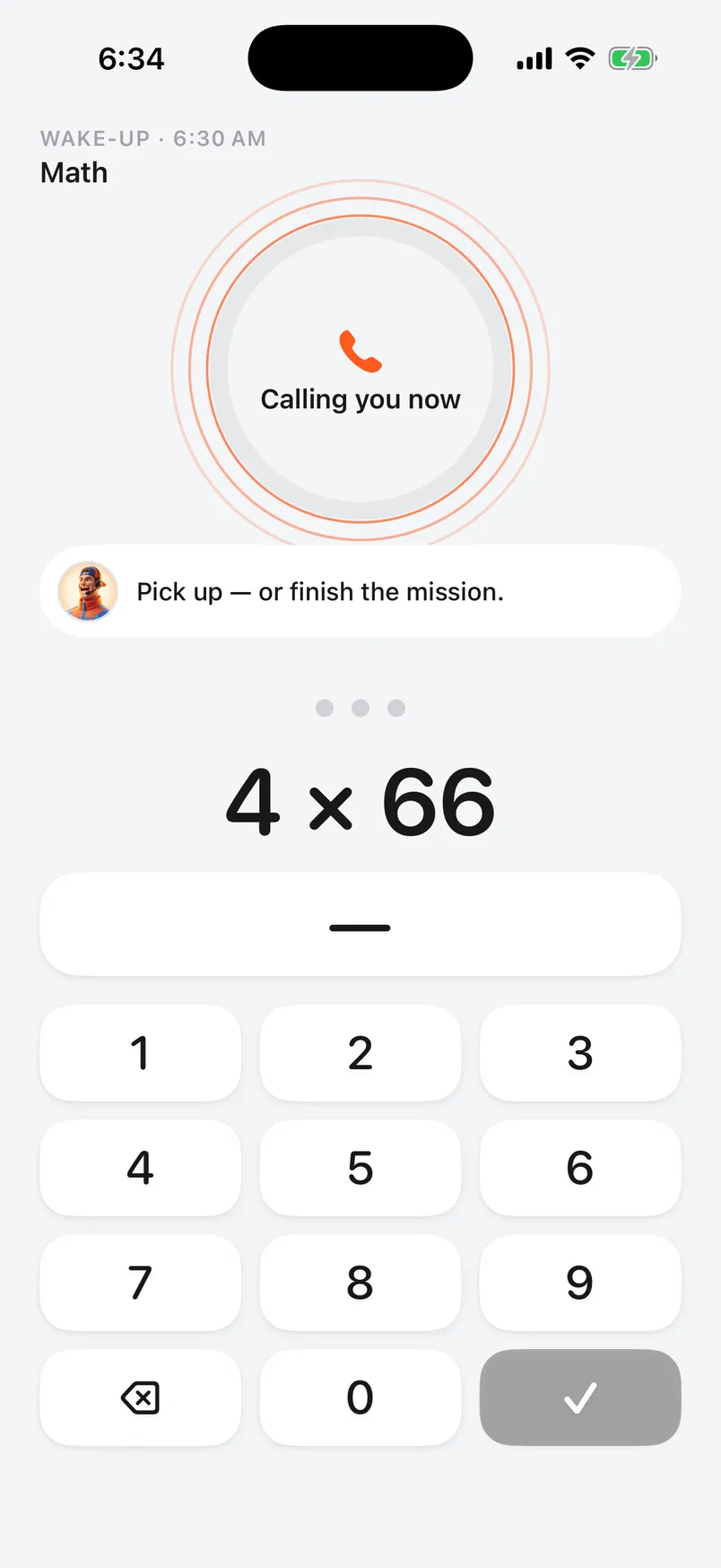
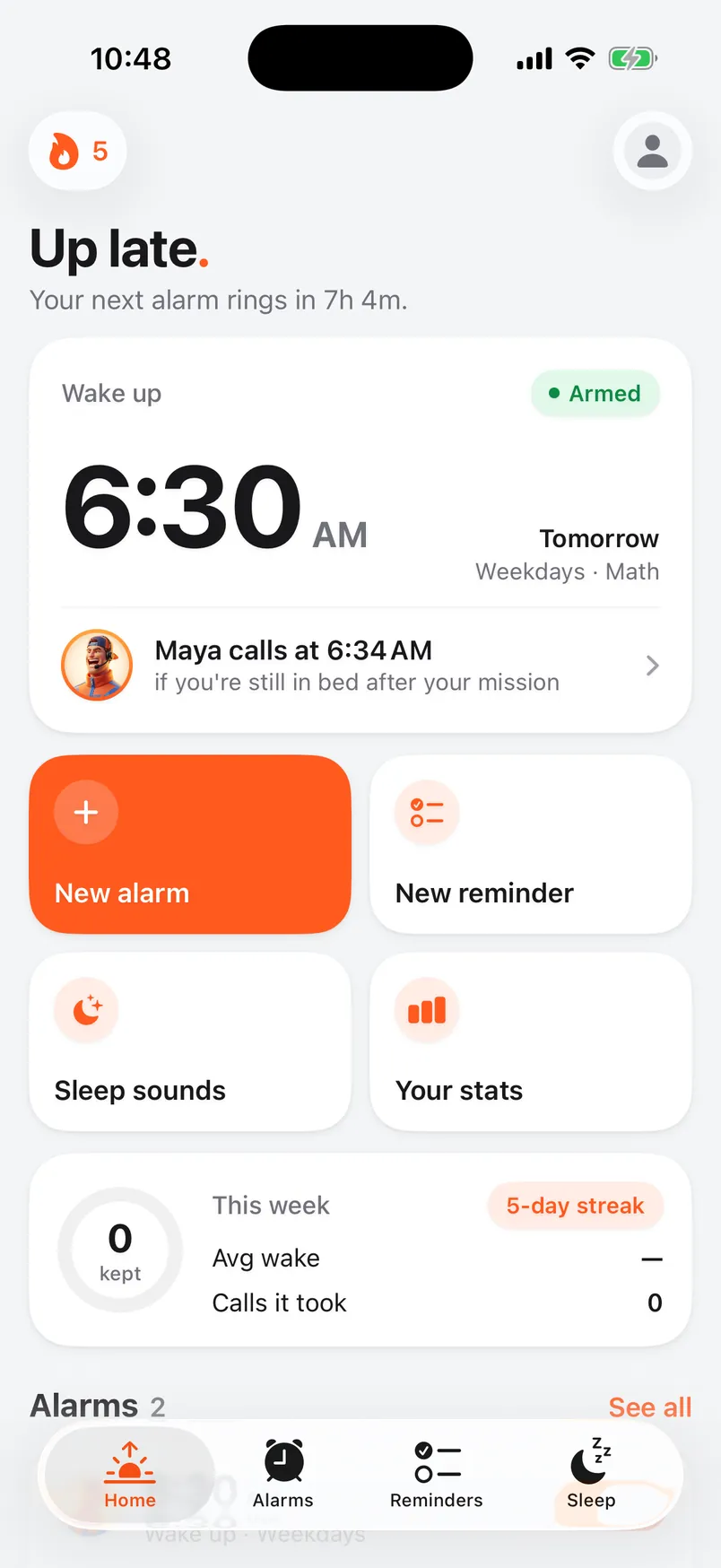
Alarmis has no snooze button. When the alarm rings, you finish a wake-up mission to stop the countdown, like solving a few math problems, walking a set number of steps or scanning a code you've put in the kitchen.
If you don't, your grace period runs out (2 to 10 minutes, your choice) and your caller phones you. You prove you're awake on the call by answering math questions or repeating your affirmation. If you're still in bed, they try again, up to 3 calls a morning.
It turns "five more minutes" from a private decision into a phone call.
The short version
- Snoozing turns your last stretch of sleep into short, broken dozes.
- Setting the alarm for when you actually need to get up gives you that time as real sleep.
- One relaxed snooze on a well-rested morning may not matter. Daily snoozing into a rushed start probably does.
- Fix your bedtime, move the alarm out of reach, and give yourself a first step.
- The most reliable fix is an alarm without a snooze button.
This isn't medical advice.