BlogSleep
Alarm strategies for night shift workers
Sleeping in daylight and waking at odd hours takes a different setup. How to plan sleep around your shifts, protect it, and wake up for work on time.
The Alarmis team4 min read

If you work nights, your alarm has a harder job than most. It has to wake you in the middle of the afternoon, through daylight and street noise, after sleep that was probably shorter and lighter than you'd like. And on your days off, it has to work with a completely different schedule.
This guide covers how to plan your sleep around night shifts, how to make daytime sleep easier, and how to set up alarms so you wake up on time for work without wrecking your days off.
Plan your main sleep
The biggest decision is when to sleep.
NIOSH, the CDC's workplace safety institute, has a training course for nurses on shift work. It suggests going straight to bed when you get home and points out that the more sleep you get before 2 p.m., the better rested you'll be. Its reasoning is that if your body hasn't adjusted to sleeping in the day, you only have a short window before your natural alerting signals kick in and try to keep you awake.
In practice, that means:
- Skip errands and chores on the way home. NIOSH calls the early morning prime sleep time for night workers.
- If you're hungry, have a small meal before bed. The course suggests something with protein and carbohydrate, like cereal and milk.
- Save everything else for after you wake up.
Have a plan for days off
Switching back to a daytime schedule every weekend and back to nights on Monday is hard on anyone. NIOSH's course suggests a compromise for days off: stay up until 3 or 4 a.m. and sleep until noon or 1 p.m. That way part of your sleep window stays the same whether you're working or not.
This won't suit everyone. Family life, a partner on a day schedule or your own preferences may push you toward a different plan. Whatever you choose, decide it ahead of time and keep it as steady as you can.
Make daytime sleep easier
Sleeping while the world is awake means fighting light and noise. The CDC's general sleep tips include keeping your bedroom quiet, relaxing and at a cool temperature, and the NIOSH course notes that daylight triggers waking, so you'll sleep better and longer in the dark. For day sleepers, that takes some extra work.
- Block the light. Blackout curtains or blinds, or a sleep mask if you can't change the windows.
- Block the noise. Earplugs, a fan, or steady background sound like rain or white noise.
- Cool the room. Daytime bedrooms tend to warm up. A fan or air conditioning helps.
- Tell your household. A sign on the door or a shared calendar so people know when you're asleep.
- Silence your phone, except for what matters. Use Do Not Disturb, and allow calls from the few people who might genuinely need to reach you.
Alarmis has sleep sounds, including rain, thunder, ocean and forest at night, with a sleep timer that fades out so the sound doesn't stop abruptly.
Set up your alarms by schedule
Night workers often juggle several wake times in a week. Doing that with one alarm you keep editing is a good way to oversleep. Set up separate alarms instead.
- One alarm per schedule. A "work night" alarm for the afternoon, a "day off" alarm for midday, and anything else you need.
- Name them. "Wake for shift" and "Days off" are easier to check than two similar times.
- Use repeat days. Set each alarm for the days it applies to, so the right one rings without you thinking about it.
- Check the week ahead. When your rota changes, update the alarms the same day.
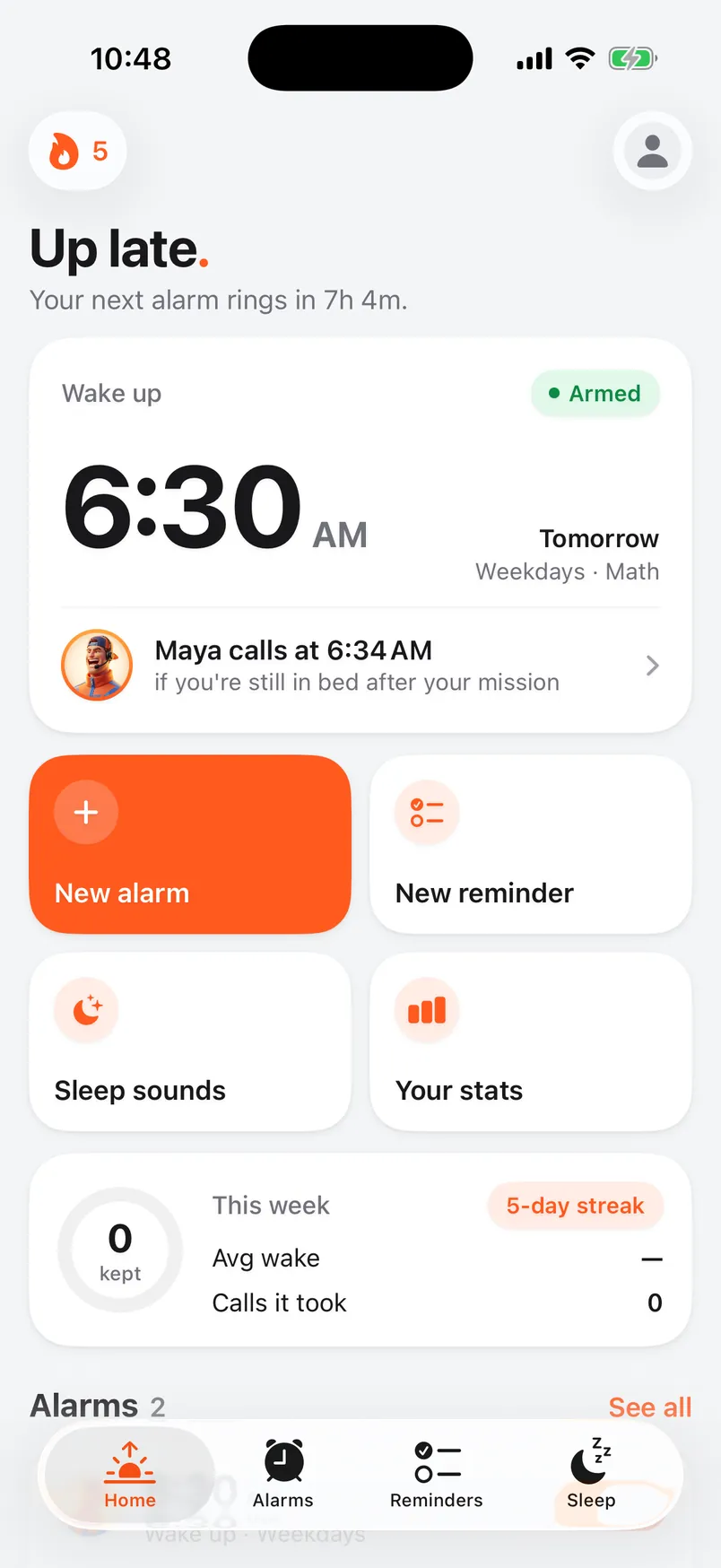
In Alarmis, each alarm can repeat on any days you like or ring once, and each one keeps its own caller and mission. You might give your shift alarm a caller and a mission that are harder to ignore, and keep the day-off alarm gentler.
Give yourself time to wake up
Waking up in the afternoon after a short sleep can leave you groggy for a while. Build that into your plan instead of fighting it.
- Set your alarm early enough to have a slow start before you need to leave.
- Get some light and move around. Open the curtains, take a shower, step outside.
- Eat something before your shift.
- If you drive to work, give yourself time to feel properly awake before you get behind the wheel.
Use a backup you can't sleep through
When you're short on sleep, it's easy to turn off an alarm and fall back asleep without noticing. For shifts, a second line of defense matters.
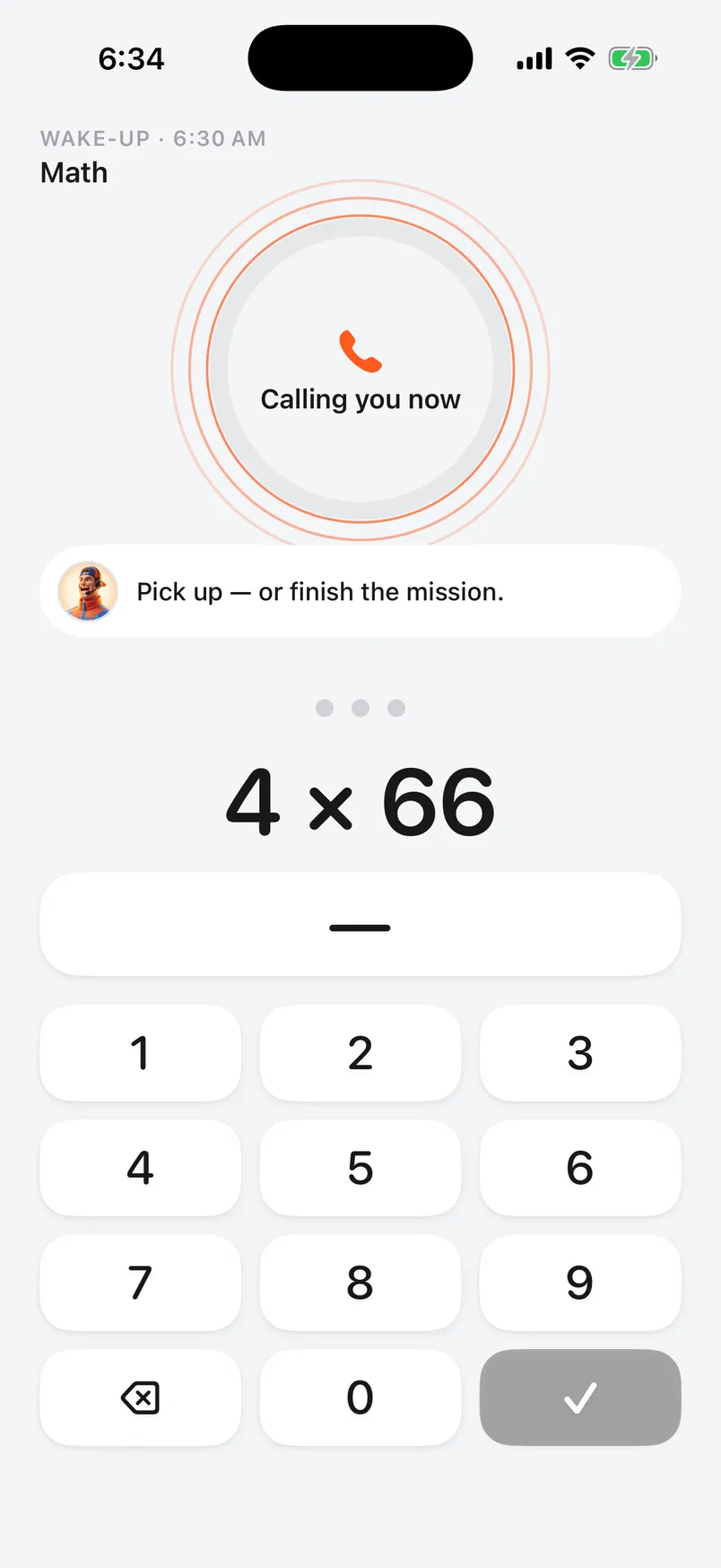
Alarmis has no snooze button. You stop the countdown by finishing a wake-up mission, like solving math problems or walking a set number of steps. If you're still in bed when your grace period ends (2 to 10 minutes, your choice), your caller phones you, up to 3 times. The alarm rings through Silent mode and Focus. For the call to ring through Do Not Disturb too, the app walks you through saving Alarmis as a contact with Emergency Bypass turned on.
Alarmis is a motivation tool, and calls can be delayed by things outside anyone's control, like poor signal or a carrier outage. For a shift you can't miss, keep a second, independent alarm as a backup.
Naps
The NIOSH course notes that night shift workers usually get less sleep overall than day workers, and it recommends spending as much time in bed as possible. If you can take a nap before going back to work, it suggests you do. Set an alarm for it so a short nap doesn't turn into a long one.
The short version
- Go to bed soon after you get home, and protect your morning sleep.
- Decide your days-off schedule in advance and keep part of your sleep window steady.
- Make your bedroom dark, quiet and cool.
- Use separate, named alarms for each schedule.
- Leave time to wake up properly before you drive.
- Keep a backup alarm for shifts you can't miss.
This isn't medical advice.