BlogSleep
Revenge bedtime procrastination, and how to get your evenings back
Staying up late to claim some time for yourself makes sense after a packed day. Here's how to get that time without paying for it the next morning.
The Alarmis team4 min read

It's 11:45. You're tired. You know you should go to bed. And you're still scrolling, or watching one more episode, or reading one more chapter.
The show is fine. What keeps you up is that this is the first time all day that nobody needs anything from you. Going to bed would mean giving it up.
That pattern is called revenge bedtime procrastination. The "revenge" part is the feeling of taking back time the day didn't give you. The cost shows up at 6 AM.
What it looks like
The details vary, but the shape is familiar.
- Your day is full of work, family or other people's plans.
- The evening is the only stretch that feels like yours.
- You stay up later than you meant to, often doing something that isn't very restful.
- You know it's a bad trade while you're making it.
- The next morning is rough, and that night you do it again.
It's a reasonable response to a day with no room in it. That's why "just go to bed earlier" rarely works on its own.
What it costs
The CDC recommends that adults aged 18 to 60 get 7 or more hours of sleep a night. If you have to be up at 6:30 and you're scrolling at 12:30, you've already lost that, before counting the time it takes to fall asleep.
The bill comes due in the morning:
- the alarm feels brutal
- you hit snooze, or want to
- you start the day rushed and foggy
- the evening "me time" feels even more necessary that night
That last point is what keeps the cycle going. Short sleep makes the day harder, and a harder day makes you want your evening even more.
Find the time somewhere else
If the late-night hours are about having time for yourself, the fix is to find that time earlier, in a form you'll actually protect.
- Schedule it. Put 30 minutes of time for yourself on your calendar in the early evening, and treat it like a meeting.
- Make it real. Spend it on something you actually enjoy. Chores don't count.
- Say no to something. If your day has no room, something has to give. Look for one obligation you can drop or hand off.
When you've already had some time that's yours, the pull to stay up gets weaker.
Share the load at home
If your evenings are crowded because of family or housework, the late-night time may be the only part of the day nobody claims. That's worth saying out loud to the people you live with.
- Trade evenings. If you have kids, take turns handling bedtime so each of you gets a free evening during the week.
- Move chores earlier. Dishes, lunches and laundry don't have to happen at 10 PM. Some can move to the morning, or to the weekend.
- Protect one night. Pick one evening a week that's fully yours, and plan it.
A bit of time that's clearly yours earlier in the evening makes it much easier to go to bed when you planned.
Decide when your evening ends
A bedtime that only exists in your head is easy to blow past. Make it concrete.
- Start with your wake time.
- Subtract the sleep you need. Aim for at least seven hours.
- Subtract the time it takes you to fall asleep.
- Subtract a short wind-down.
That gives you a time to start getting ready for bed. Put an alarm on it, just like your morning alarm.
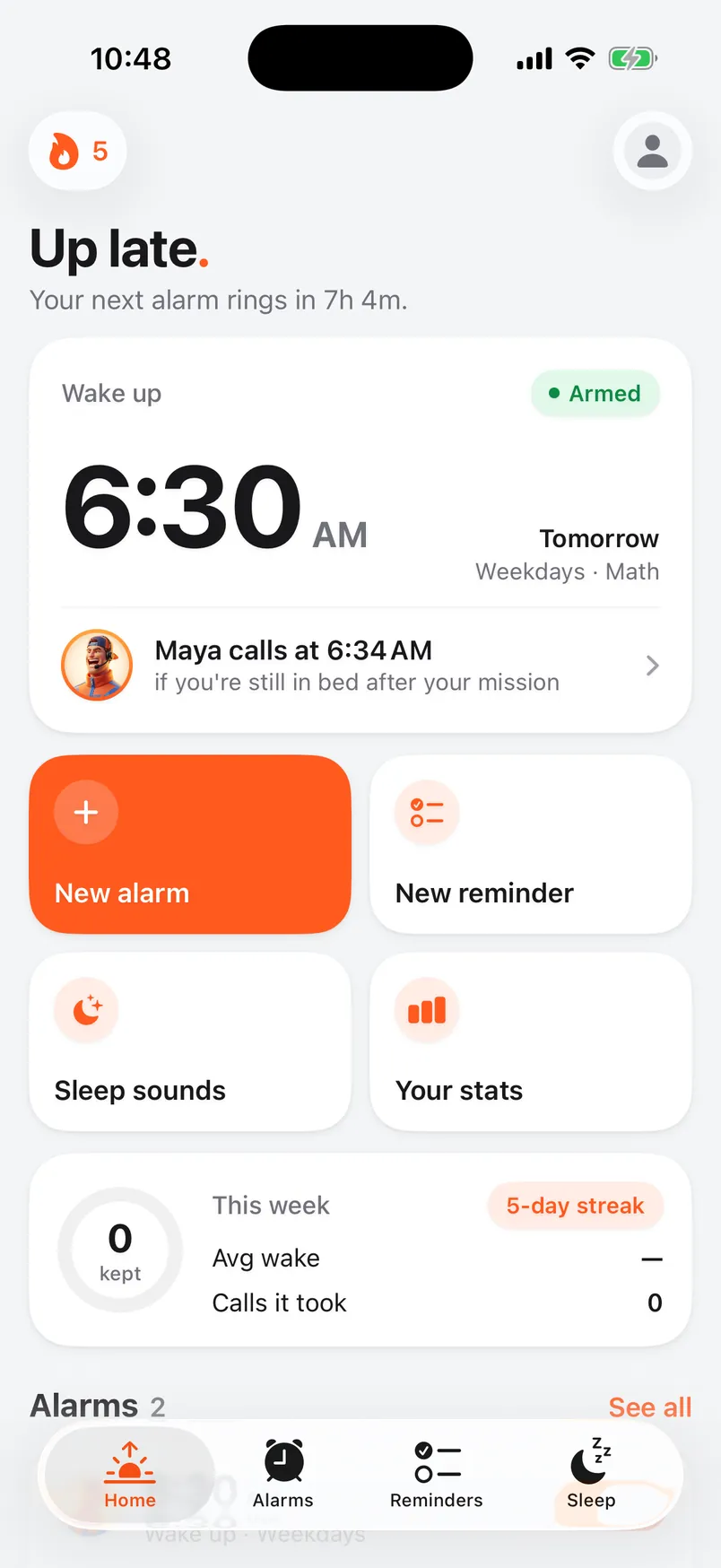
Alarmis can do this for you. It sends a bedtime warning before your next alarm, timed to your sleep target, which you can set between 6 and 10 hours. If you want an extra cue, turn on the wind-down nudge for a quieter reminder 45 minutes before the warning.
Make the last hour easier to end
The hardest part is stopping. A few ways to make it easier:
- Pick a stopping point in advance. One episode, one chapter, or until a set time. Decide before you start.
- Turn off screens early. The CDC suggests turning off electronic devices at least 30 minutes before bed.
- Charge your phone outside the bedroom. If it's not in reach, you can't scroll. Use a separate alarm clock, or put the phone across the room.
- Turn off autoplay. Make the next episode a choice you have to make.
- Dim the lights. Lower lights in the last hour make it feel like the day is ending.
Make winding down something you look forward to
If bedtime feels like losing, you'll keep putting it off. Make the last half hour something you enjoy.
- read something on paper
- take a shower or bath
- listen to music or a podcast with a timer
- stretch, or sit quietly with a cup of something warm
Alarmis has sleep sounds like rain, thunder and ocean waves, with a sleep timer that fades out, so you can drift off without the sound cutting off abruptly.
Don't fix it all at once
If you're going to bed at 1 AM now, a midnight bedtime is a win. Move it 15 minutes earlier every few nights until you reach your target.
Track your bedtimes for a week before you change anything. You'll see which nights go late and why. Maybe it's the nights you work late, or the nights you don't see friends. Then fix the pattern behind it.
The short version
- Staying up late to get time for yourself is understandable, and it costs you the next morning.
- Find time for yourself earlier in the evening and protect it.
- Work out your bedtime from your wake time, and set an alarm for it.
- Pick a stopping point, turn off screens early and keep the phone out of reach.
- Make winding down something you enjoy.
- Move your bedtime earlier in small steps.
This isn't medical advice.